
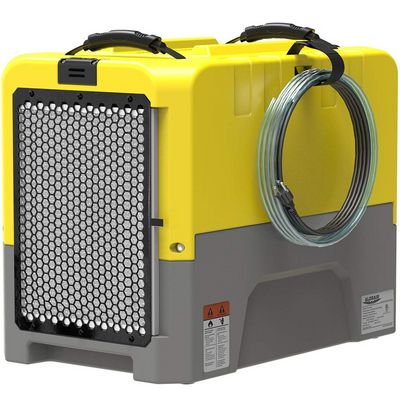
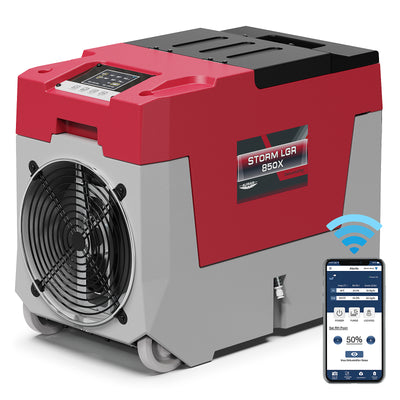
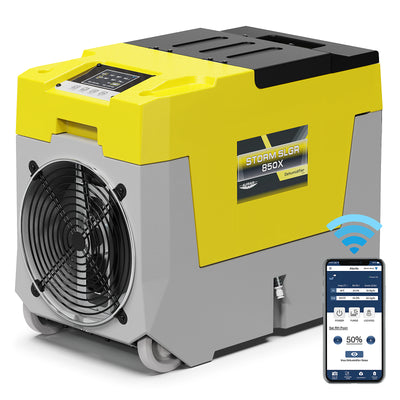
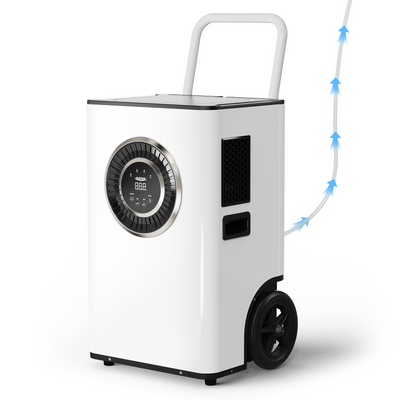
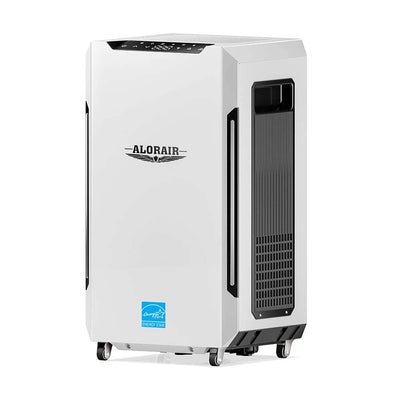
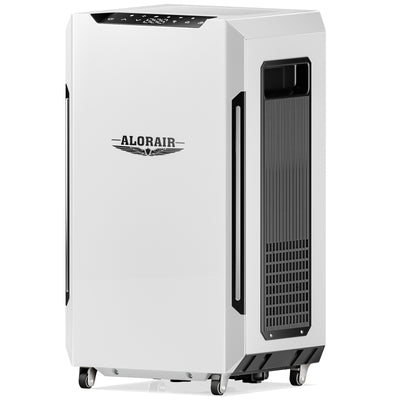
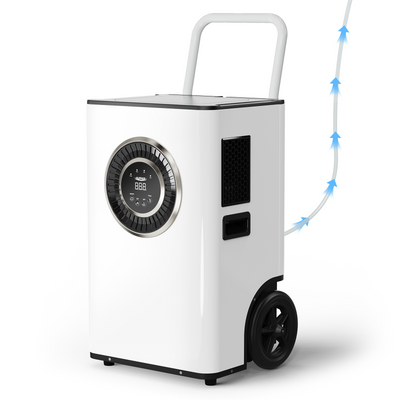
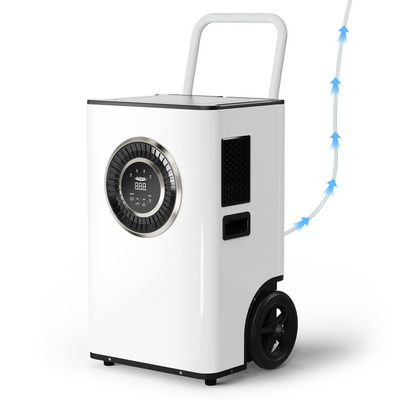
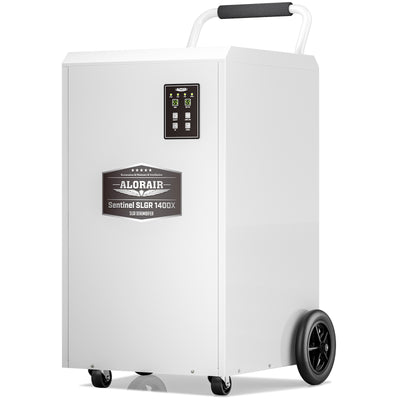
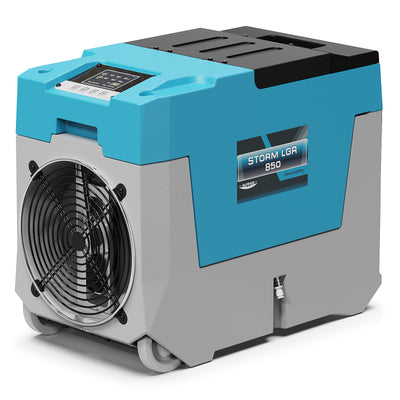
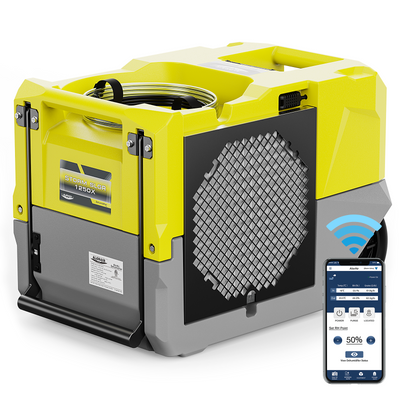
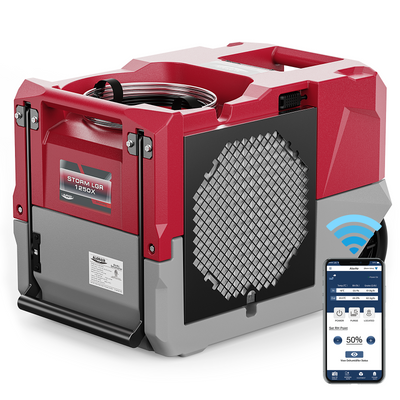
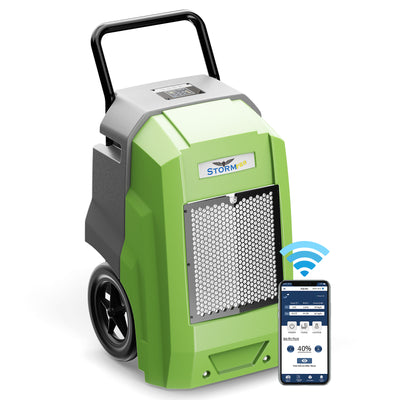
Water Damage Restoration
Features:
- High moisture removal technology
- Built-in condensate pump
- Compact, stackable design
- Low-temperature operation
High-capacity moisture control for restoration projects, construction sites, warehouses, and other demanding commercial environments.
Shop rugged commercial-grade dehumidifiers with continuous drainage, automatic humidity control, and durable construction designed for extended operation.
High-Capacity Moisture Removal
Powerful LGR and SLGR technology removes large amounts of moisture efficiently, even in demanding conditions.
Commercial-Grade Components
Built to perform reliably during extended operation in demanding commercial environments.
Designed for Continuous Operation
Built for extended runtimes to keep your projects moving forward.
Rugged & Portable Design
Durable roto-molded housing, large wheels, and ergonomic handles make transport, setup, and storage easy on any job site.
Automatic Humidity Control
Set your target humidity and let the unit automatically maintain optimal conditions with minimal manual monitoring.
Easy Maintenance
Service-friendly design with easy access to filters and key components for routine maintenance.
Wide Operating Range
Performs reliably across a wide range of operating temperatures and environmental conditions.
How to Choose the Right Dehumidifier
Follow our buying guide to find the right dehumidifier for your application.
Bulk Orders & Fleet Pricing
Save more when purchasing multiple units. Custom quotes are available for qualifying orders.
Warranty & After-Sales Support
Access reliable warranty coverage and expert support whenever you need assistance.
Need Help Choosing?
Our team is here to help you find the right equipment for your project.
Commercial dehumidifiers are designed for demanding spaces such as basements, warehouses, retail properties, construction sites, and water-damage restoration projects. They typically offer higher moisture-removal capacity, stronger airflow, and more durable components than residential models.
Industrial dehumidifiers are typically designed for larger facilities, specialized processes, or continuous operation in environments such as manufacturing plants, food processing facilities, and large warehouses. They may offer higher airflow, ducted installation options, advanced humidity controls, and integration with building systems. However, there is no universal capacity threshold separating commercial and industrial units, and the two categories often overlap.
Yes. Mold is more likely to grow in damp environments, particularly when relative humidity remains above 60%. A commercial dehumidifier reduces excess airborne moisture and can help maintain indoor humidity between approximately 30% and 50%, making conditions less favorable for mold growth.
However, a dehumidifier does not remove existing mold or repair the underlying moisture source. Leaks, drainage problems, and water-damaged materials should also be addressed. If significant mold growth is already present, proper cleaning, ventilation, or professional remediation may be necessary.
For businesses, restoration projects, and large moisture-prone spaces, a commercial-grade dehumidifier is often a worthwhile investment. Compared with residential units, commercial models generally provide greater moisture-removal capacity, more durable components, and better performance during extended operation.
Many models also offer features such as automatic drainage, built-in pumps, low-temperature operation, and digital humidity controls. Although the upfront cost is higher, the increased durability, faster drying, and reduced downtime can make commercial dehumidifiers more cost-effective for long-term or heavy-duty use.
Common problems include reduced moisture removal due to dirty filters or restricted airflow, drainage or pump issues, ice buildup on the coils, unusual noise, and inaccurate humidity readings. Performance may also decline when the unit is too small for the space or is operated outside its recommended temperature range.
Many of these issues can be prevented by regularly cleaning the filters, keeping the air inlet and outlet clear, checking the drain hose, and selecting a unit with sufficient capacity for the application.
The right size commercial dehumidifier depends on the size of the space, ceiling height, humidity level, moisture conditions, and application. The table below provides a general guideline based on AlorAir commercial dehumidifier coverage ranges. For water damage restoration, flood cleanup, or extremely humid environments, additional capacity may be required to achieve faster drying.
| Space Size | Recommended Capacity Range |
|---|---|
| Up to 1,300 sq. ft. | 50–60 PPD |
| 1,300–2,300 sq. ft. | 70–90 PPD |
| 2,300–3,000 sq. ft. | 90–125 PPD |
| 3,000–3,800 sq. ft. | 125–160 PPD |
| 3,800+ sq. ft. | 160+ PPD or multiple units |
Note: These figures are based on AlorAir's commercial dehumidifier lineup and represent AHAM-rated capacity under standard test conditions (80°F, 60% RH), unless otherwise noted. Actual performance may vary based on ceiling height, air exchange rate, water sources (leaks, standing water), insulation, and outdoor climate. For flood restoration or high-moisture-load environments, models with SLGR (Smart Low Grain Refrigerant) technology are recommended, as they maintain higher efficiency in high-humidity, low-temperature conditions common on restoration job sites.
Regular maintenance helps commercial dehumidifiers operate efficiently and extends their service life. Basic upkeep typically includes cleaning or replacing air filters every 1-2 months (more frequently in dusty environments), checking and clearing the drain hose or condensate pump to prevent clogs, and wiping down the coils periodically to remove dust buildup that can reduce airflow and efficiency.
For units in continuous or heavy-duty use, it's also worth periodically inspecting the housing for damage, checking that the humidistat and controls are reading accurately, and verifying the unit is operating within its rated temperature range. Following the manufacturer's maintenance schedule and keeping the unit in a clean, well-ventilated area will help prevent the most common issues and reduce the need for repairs.