You catch a musty smell. Then you spot a dark patch behind the storage boxes. Small patches are often a do-it-yourself (DIY) job, but cleaning without fixing the water source usually means the mold comes back.
To get rid of mold in your basement, assess the problem, fix the moisture source, clean what you can, remove what you can’t, dry the area completely, and check for returning growth. The order matters. This guide covers how to spot mold, why it grows, when to call a pro, the cleanup steps, and how to keep it from coming back.
Signs of Mold in Your Basement
A musty basement smell, spots, and moisture clues are the usual signs. CDC notes that mold comes in many colors, so color tells you little.
Common Warning Signs
- Spots or fuzzy growth on walls, floors, or stored items
- A musty smell that returns after airing out
- Water stains, peeling paint, or damp materials
- A past leak or flood, even if it looks dry now
Where to Check
Grab a flashlight:
- Behind furniture and shelves
- Under stored boxes
- Along wall-floor joints
- Near pipes and windows
- On exposed framing, including the sill plate (the wood on top of the foundation wall)
Stains That Look Like Mold
Chalky white deposits on block walls are often efflorescence, salt left behind when water moves through masonry. It isn’t mold, but it signals moisture. Treat any lasting discoloration in a damp spot the same way.
When Mold May Be Hidden
Smell mold but can’t see it? It may hide behind drywall, under carpet padding, or inside walls. Don’t open walls or strip wallpaper to check. EPA warns that this can release a burst of spores. Hire an experienced professional instead.
Why Does Mold Grow in Basements?
Spores float everywhere and grow when they land on something damp. No mold grows without moisture. Basements sit below ground, so walls and floors meet damp soil and tend to stay cool. Moisture arrives in five main ways.
High Humidity
Relative humidity (RH) is the amount of water vapor in the air compared with the most the air could hold at that temperature. When basement RH stays high for days or weeks, concrete, wood, and stored items can stay damp enough to support growth, even without a leak. Humid air can come from outdoors, from damp floors and walls, or from appliances like clothes dryers that aren’t vented outside.
Condensation
Condensation forms when humid air meets a surface colder than the air’s dew point, the temperature at which water vapor starts to turn into liquid. Cold-water pipes and below-grade walls are common trouble spots. Room humidity and surface moisture aren’t the same thing. A basement can read only moderately humid overall while one cold pipe or wall section stays wet. EPA notes that condensation on windows, walls, or pipes can signal high humidity.
Leaks and Seepage
Plumbing leaks, water entering through window wells, and foundation seepage (groundwater slowly moving through a wall, crack, or floor joint) can all wet a basement. Seepage often shows up after heavy rain, so a basement may look dry for weeks and then turn damp.
Exterior Drainage Problems
Clogged gutters, short downspouts, and soil that slopes toward the foundation send water straight to your wall.
Wet Materials and Storage
Building materials that were never fully dried after a leak, plus cardboard, paper, and fabric stored on damp floors, give mold both moisture and something to grow on. CDC lists paper, cardboard, wood, insulation, drywall, and carpet among the materials where mold can grow. Storage areas behind shelving are easy to overlook, so a damp spot can go unnoticed for a long time.
Can You Remove Basement Mold Yourself?
Sometimes. If you wonder how to remove mold from basement walls yourself, start with size. EPA’s 10-square-foot guideline says homeowners can usually handle a smaller patch. But basement mold removal also depends on the cause, the materials, and who lives in your home.
DIY or Professional? Match Your Situation
| Situation | Next step |
|---|---|
| Small, accessible surface growth | Fix the moisture source first, then clean with protective gear. Under about 10 sq ft is a starting point, not a guarantee; also consider the material, water source, and health risks. |
| Larger areas or extensive water damage | Consider an experienced mold professional, especially if the damage keeps returning. |
| Suspected hidden mold | Have a professional investigate rather than opening walls yourself. |
| Sewage or polluted water | Call a professional experienced in contaminated-water cleanup. |
| Suspected mold in the HVAC (heating and cooling) system | Don’t run the system until a professional has assessed the suspected contamination. |
| Asthma, mold allergies, a weakened immune system, or underlying lung disease at home | Don’t take part in the cleanup yourself. Arrange for someone else to do it, and talk to a health professional about your exposure concerns. |
What Makes a Basement Mold Problem More Complex?
Even a small patch deserves a closer look when:
- You can’t find the moisture source.
- Growth affects porous materials like drywall, insulation, or carpet, which may need removal rather than surface cleaning.
- Mold returns after cleaning, or a musty smell has no visible source.
- Someone at home is sensitive to mold and needs to avoid exposure.
Consider professional help when the source is unclear, affected materials are difficult to remove safely, or growth keeps returning.
How to Get Rid of Mold in Your Basement: Step by Step
These steps fit a small, accessible, clean-water problem. Do them in order.

1. Find and Fix the Moisture Source
Find the water first, ideally during or right after rain.
- Pipes and appliances: Look for leaking connections, slow drains, and water marks around washers, water heaters, and utility sinks. Next: Tighten or replace the fitting, or call a plumber if you can’t trace the leak.
- Windows and window wells: Check for dampness that appears after rainfall. Next: Clear debris from the well, inspect the seals around the frame, and make sure the well can drain.
- Foundation walls and floor edges: Look for seepage patterns and spots that turn wet again and again. Next: Note when it happens, then fix gutters and grading first. If seepage continues, talk to a foundation or waterproofing contractor. No single coating or vapor barrier suits every basement.
- Cold pipes and walls: Look for water beads or rust streaks, which can signal condensation. Next: Insulate cold-water pipes and lower the humidity.
- Exterior drainage: Inspect gutters, downspout discharge, and pooling water. Next: Clean and repair gutters, extend downspouts away from the house, and regrade soil that slopes toward the foundation.
- Storage areas: Check beneath and behind damp items. Next: Move items out, dry the spot, and sort what can be saved
Can’t find the source? Fix that first. Wet surfaces give mold a fresh start.
2. Gather Supplies and Put On Protective Equipment
EPA recommends respiratory, hand, and eye protection.
- N95 respirator: filters at least 95% of small airborne particles. It must seal tightly.
- Gloves that reach mid-forearm (rubber, nitrile, or PVC if you use bleach)
- Goggles without vent holes
- Mild detergent, water, a bucket, and brushes or cloths
- Sturdy, sealable bags
3. Decide What Can Be Cleaned and What Should Be Removed
Mold can fill the pores of porous materials and resist full removal. Ask: Is the growth only on the surface? Is the material damaged? Can you dry it fully?
| Material | Cleaning may work when | Removal or specialist help may be needed when |
|---|---|---|
| Hard, sealed surfaces (metal, plastic, glazed tile) | Surface growth you can scrub and dry | Cracks, pits, or hard-to-reach seams |
| Concrete and masonry | Light growth on solid surfaces that can dry | Growth returns, the wall stays damp, or masonry crumbles |
| Wood framing | Surface growth on sound wood | Soft wood, deep growth, or lasting dampness |
| Drywall, insulation, and ceiling tiles | Drywall briefly wet with clean water, firm, seams intact | Swollen or moldy drywall; wet or moldy insulation and tiles |
| Carpet, padding, and cardboard | Carpet dried within 24-48 hours of clean water, no visible growth | Visible growth, or wet over 48 hours. Toss moldy cardboard |
4. Clean Suitable Surfaces
Here’s how to clean mold in basement areas that passed Step 3. Detergent and water do most of the work.
- Put on your gear and mix mild detergent and water in a bucket.
- Scrub the mold off with a brush or cloth.
- Wipe with a clean, damp cloth.
- Dry the surface right away (Step 6).
Do You Need Bleach?
Usually not. EPA doesn’t recommend bleach or other biocides (chemicals that kill living things) as routine practice, since dead mold can still trigger allergies. If you use bleach, CDC allows no more than 1 cup per gallon of water. Ventilate, and never mix it with ammonia.
Don’t paint or caulk over mold.
5. Handle Contaminated Waste, Tools, and Clothing
- Removed materials: Bag unsalvageable moldy materials before you carry them out. EPA calls for double-bagging in 6-mil polyethylene (heavy plastic) and says it usually goes out as ordinary construction waste.
- Tools and supplies: Wash buckets and brushes with detergent and water. Clean a wet vacuum’s tank and hose.
- Clothing: CDC advises showering and changing after you leave a mold site. Bag worn clothes until you wash them.
6. Dry the Area Completely
Dry everything fast. EPA’s goal for water-damaged materials is 24 to 48 hours. A hygrometer (humidity meter) reads the air, not the materials, and a dry-looking surface can hide wet material. EPA says moisture meters can check materials directly.
A dehumidifier speeds drying by pulling moisture from the air so wet materials can release theirs. It doesn’t replace removal or repair. Many basements have no floor drain nearby, but a pump or hose run lets you drain a basement dehumidifier without a floor drain.
Hold off on fans until you’ve cleaned visible growth, since CDC says fans may spread mold that has started to grow. Skip them if the water might be contaminated.
7. Check That the Cleanup Is Complete
Before considering the cleanup complete, check that:
- The moisture source has been fixed.
- Affected materials have been cleaned or removed as appropriate, and the remaining materials are dry.
- Visible mold and moldy odors are gone.
- A follow-up check a week or two later shows no new dampness or growth.
- A check after the next heavy rain shows no new damage or growth.
Still see or smell mold, or still feel symptoms? Get an assessment. EPA calls completion a judgment call, so ask a pro when you’re unsure.
How to Keep Basement Mold From Coming Back
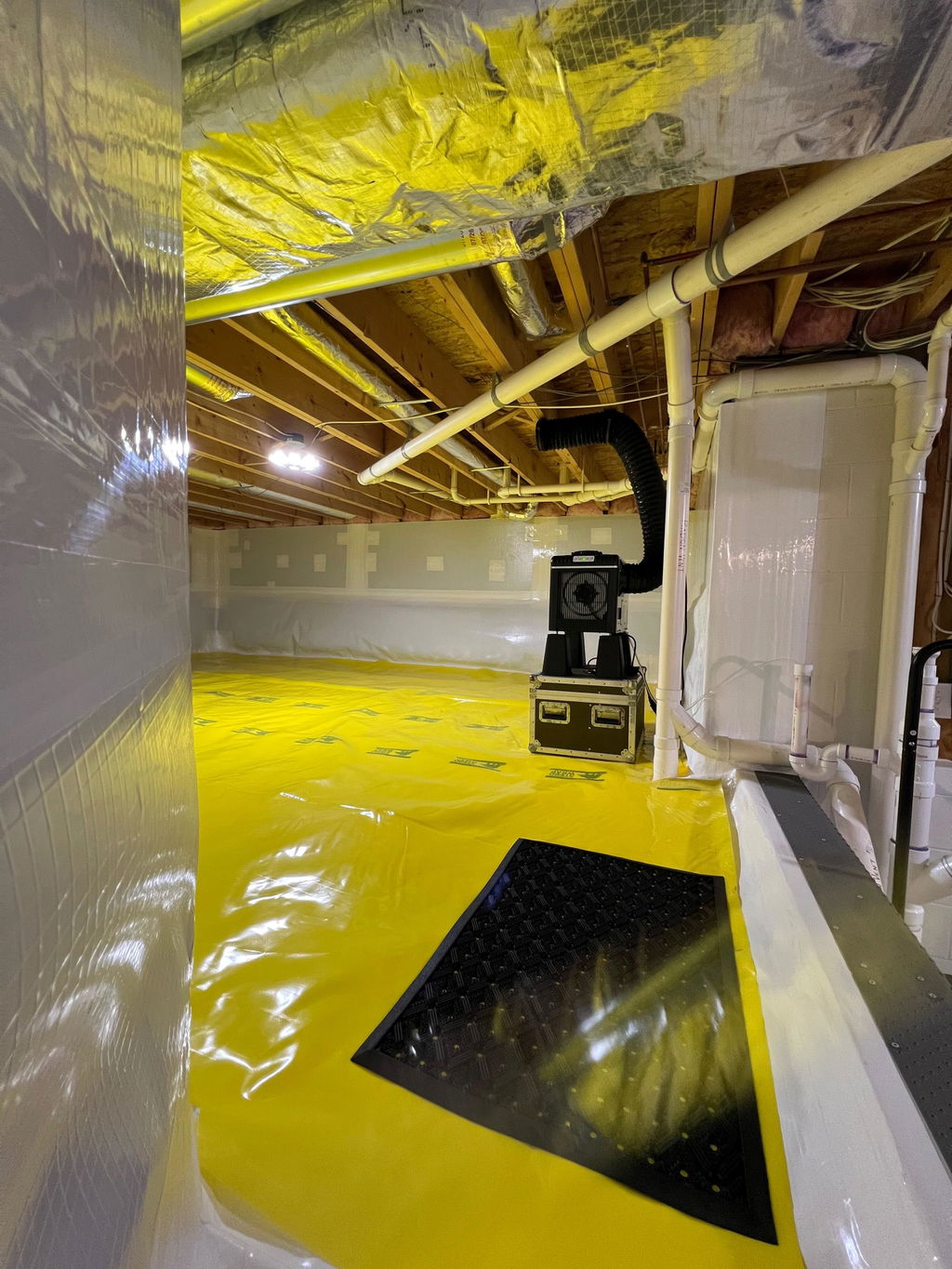
To help keep basement mold from coming back, control humidity, direct water away from the foundation, and keep stored items dry. Recheck these measures after heavy rain or a leak.

Monitor Humidity and Use a Dehumidifier When Needed
Keep a hygrometer in the basement and check it often. EPA recommends indoor RH below 60%, ideally 30% to 50%, and CDC says no higher than 50%.
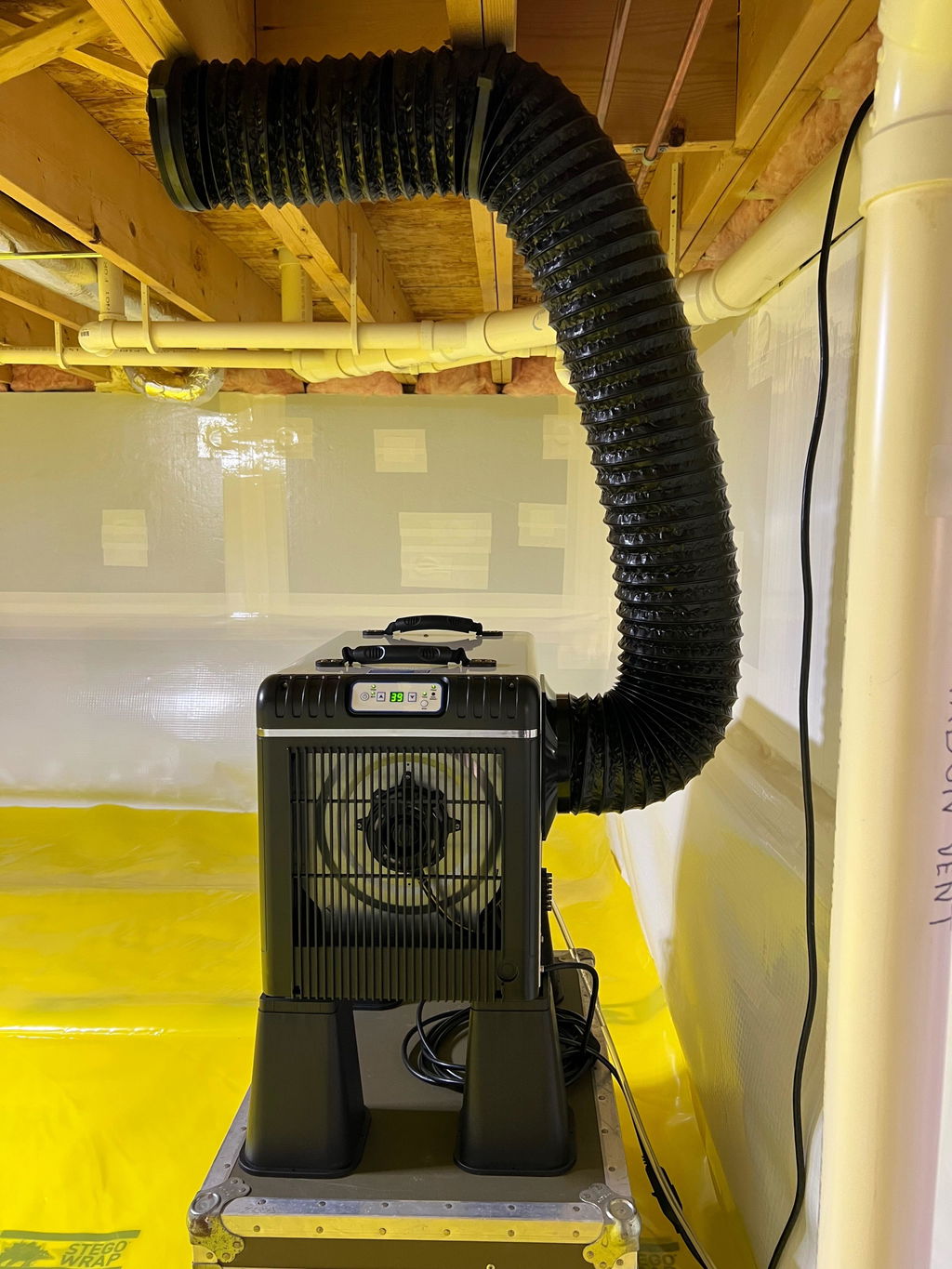
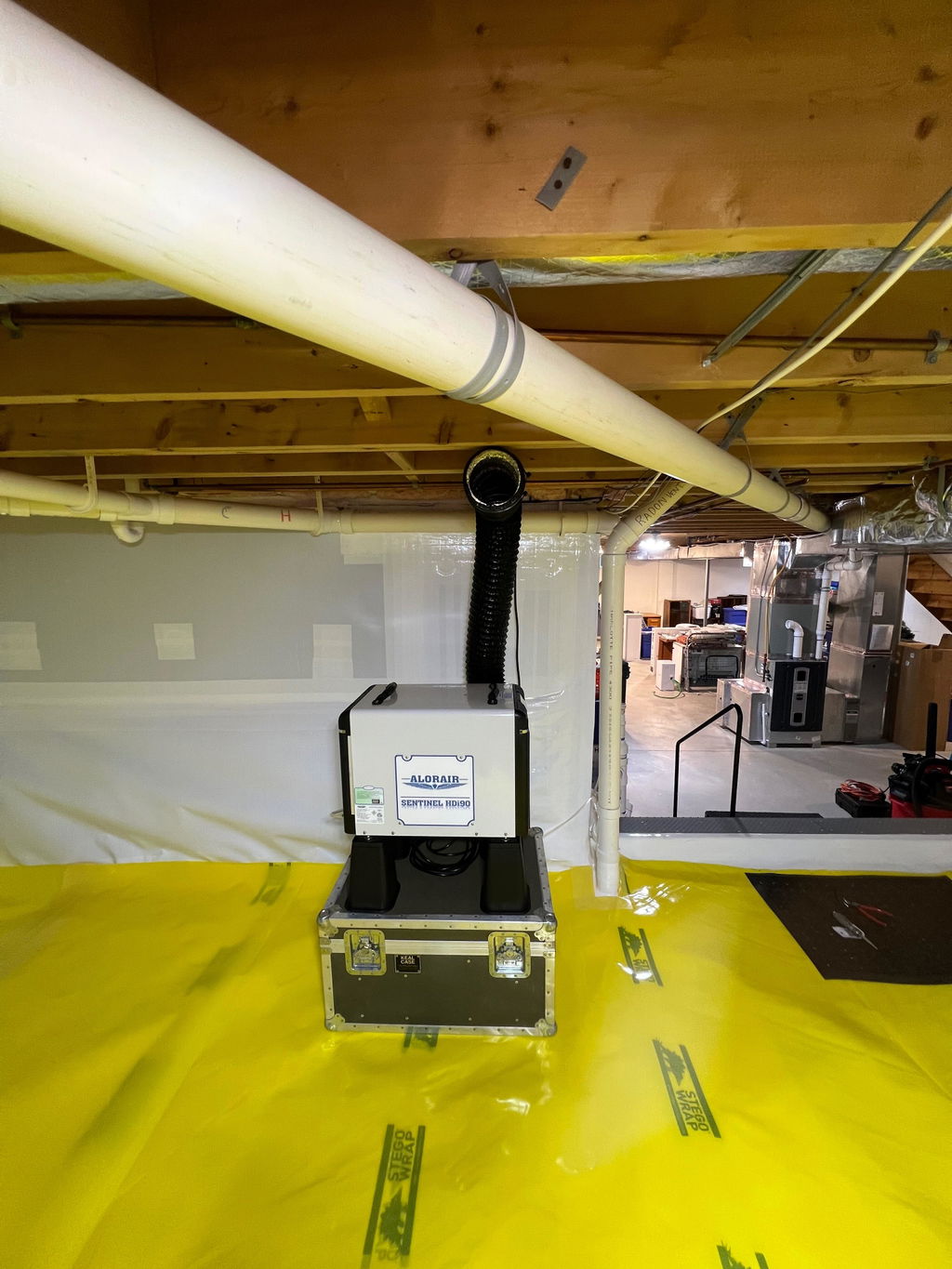
Once you’ve fixed the leaks and removed the mold, a dehumidifier can hold that range. The best target shifts with the seasons, so adjust your dehumidifier’s humidity setting as conditions change.
Size matters too. A unit that’s too small runs nonstop and never catches up, and a cool basement cuts output further. A damp basement needs a dehumidifier sized for its square footage and moisture level.
TheDryAir, an authorized dehumidifier wholesaler, carries basement dehumidifiers with different capacities and drainage options. The Sentinel HD55S and HD35P below illustrate two choices; compare their rated coverage, moisture-removal capacity, and drainage requirements with your basement’s needs:
- Sentinel HD55S (gravity drain): 55 pints per day (PPD) at standard AHAM test conditions (80°F, 60% RH), up to 1,300 sq ft. It runs down to 33.8°F with auto-defrost and is ENERGY STAR certified. Best with a nearby floor drain or downhill hose run.
- Sentinel HD35P (pump or gravity): 35 PPD at AHAM conditions, up to 1,000 sq ft. Its built-in pump lifts water to 19.6 ft, and it runs from 33°F to 105°F. Best when no drain is nearby.
Maintain Drainage and Reduce Condensation
- Clean gutters regularly and slope the ground away from the foundation.
- Insulate cold-water pipes.
- Vent dryers and other moisture makers outdoors.
- Ventilate only when outdoor air is drier.
Keep Stored Items Dry and Inspect After Water Events
- Use shelves or plastic bins instead of cardboard, and keep them off the floor.
- After rain, a leak, or a drainage failure, dry anything wet within 24 to 48 hours. EPA says mold usually won’t grow if materials dry in that window.
Frequently Asked Questions
Does a dehumidifier get rid of existing mold?
No. It lowers humidity, which helps prevent mold, but it can’t remove mold that’s already growing. Clean it and fix the water source first.
Should I use bleach to clean basement mold?
Usually not. EPA doesn’t recommend it as routine practice. Start with detergent, water, and thorough drying.
Why does mold keep coming back after cleaning?
The water source usually isn’t fixed. Materials may not have dried fully, or hidden growth got missed. Recheck for leaks, seepage, and condensation.
What if my basement smells musty but I can’t see mold?
Check behind furniture and under damp items. A musty basement smell with no visible source can mean hidden growth. Call a pro instead of opening walls.
Do I need a mold test before cleaning?
Usually not. EPA says sampling is unnecessary when mold is visible, and the CDC doesn’t recommend testing.
Don’t Let the Mold Come Back!
One rainy week can undo a weekend of scrubbing. That’s how to get rid of mold in basement walls and floors: find the water, clean what you can, remove what you can’t, dry everything, and check back.
Then keep it dry. The right basement dehumidifier can hold humidity in the safe range, so mold has less to feed on. Pick one built for cold, damp spaces, and match its size and drainage to your basement. Browse basement dehumidifiers with pump and drain-hose options and choose the one that fits your space.